
In a tech-rich classroom, children may turn to AI for answers, but they still turn to teachers for assurance.
Every morning, as I walked into my Grade 5 class, I was greeted with an energy that reminded me why teaching is a privilege. Among the students was a young girl from the Gifted and Talented group who never failed to amaze me. Before I had even placed my books on the table, she would be ready, eager to lead the class and help navigate the various digital tools we used, from IXL and Spark Studio to simulations and Kahoot quizzes and beyond. I often believed that students like her could tackle any situation independently, learning at their own pace with grace and enthusiasm. Until one day, she approached me with a quiet question that carried far more weight than it seemed:
“Ma’am, I asked AI how I can improve aesthetically… what more can I do?”
Her use of the word “aesthetically” impressed me, but it also made me pause. Here was a young child using advanced language to express a very human worry about her appearance and turning to AI for guidance. In that moment, I realised that even the most capable young learners who glide through digital platforms with ease need human reassurance and emotional grounding. I knelt beside her and told her she was beautiful just the way she was. More importantly, I reminded her that who she is goes far beyond appearance. Her curiosity, problem-solving, and calm way of handling real-life situations are what truly define her. She listened quietly, then gave a small, thoughtful smile expressing her understanding of my guidance She said, she would remember it whenever that question came to her mind again.
From a scientific point of view, intelligence, adaptability, and emotional resilience are shaped by neural connections that grow through real experiences and positive human interactions. This is something that must work alongside AI tools, not be replaced by them. Digital tools enrich learning by offering simulations, instant feedback, and countless opportunities to explore.
That day, it became clear to me that for some students, the line between digital advice and human guidance can begin to blur; therefore, as teachers, our role along with nurturing scientific learning is also to build their confidence and trust in their own abilities. That interaction showed me that what students truly seek is not just information, but affirmation. It reminded me that even in a tech-rich, high-achieving classroom, questions about appearance and self-worth still need a human ear and a human heart.
In a world where digital tools guide learning, moments like this show that teachers continue to guide the heart, and that balance is what makes education truly complete.
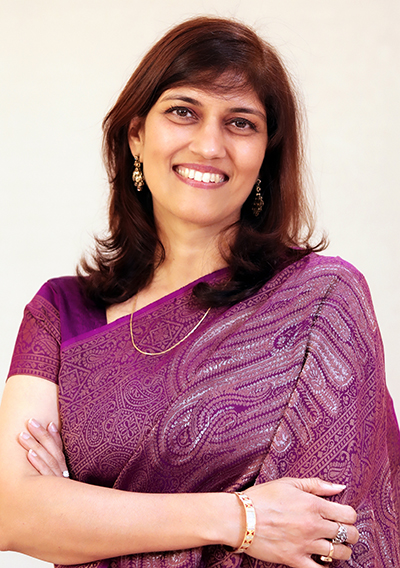
SHILPI MATHUR
HOD-SCIENCE