
All through my teenage years, I wondered why people treated me the way they did. For a long time, I viewed those moments through the eyes of the child I was then – a stubborn and overly sensitive child who struggled with self-esteem and tried to fit in.
But as my understanding of human behaviour grew, I realised two things that shaped the way I looked at life. First, someone’s inability to understand my feelings does not diminish my worth. Second, and most importantly, although I may never know the reasons behind every action, I can choose not to let those experiences define how I view people or how I treat them.
Learning and practising psychology has not only enriched my understanding of how experiences, environment and emotional awareness shape human behaviour, but has also helped me look at my childhood differently. I now see people as more than their mistakes, just as I had always hoped to be seen as more than the characteristics others noticed in me.
Today, as a counsellor, Pause, Understand and Connect is not merely a phrase; it is an integral principle of my life philosophy. Before reacting to someone’s behaviour, I pause for a moment and try to observe what is happening, reminding myself that what I see may not tell the whole story. Next, I try to understand the situation from the other person’s perspective. The willingness to listen and make someone feel heard is an art that builds trust and appreciation while signalling openness to differences. When people recognise that you are genuinely engaged with them, they are more likely to value the conversation and feel respected. This creates an opportunity for genuine connection.
For me, these steps are not about being endlessly sensitive or feeling sorry for everyone. They are about approaching people with empathy – with a willingness to understand their perspectives while acknowledging their backgrounds, strengths and individuality.
My journey in psychology began without a grand plan. Yet, over time, it gave me a language for something I had valued since childhood: the belief that people deserve to be understood beyond their most visible characteristics. I have learnt that empathy is not about assuming everyone is good or that every hurtful action is unintentional. It is about recognising that human beings are complex, that behaviour does not tell the whole story, and that understanding can coexist with accountability and boundaries.
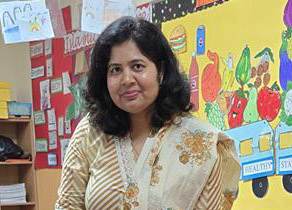
Alfiya Nagriwala, School Counselor