

On the exhilarating joy of nurturing student expression – in competitions, on stage, and everywhere in between.
There is a moment every English teacher lives for. It is the moment a student steps forward, draws a breath, and speaks. Voluntarily. Audaciously. With every fiber of their being.
An English classroom is, at its finest, a stage. We train students to compere school events – to hold a microphone with authority, to command a restless auditorium with nothing but wit and warmth. We nurture them through Dramatic Arts, coaxing shy performers out of their shells. We coach them for elocution contests, debates, and declamation events, where they learn that language is not merely a subject to be studied but a living instrument to be wielded. Each of these experiences gifts the student something no examination ever could: the irreplaceable joy of self-expression.
Something magnificent happens when a student realizes that her voice is not merely for answering roll call – it is a tool, sharp as a sword and warm as sunlight, capable of moving an audience and commanding an entire room to lean forward and listen. Watching that realization dawn is a pleasure no report card can measure.
The journey is never a straight road. Students arrive hesitant and stiff, eyeing the microphone as though it might bite. Week by week, they loosen. They laugh. They falter, they recover, and slowly – beautifully – they begin to soar.
One such student was Riya (name changed). Selected for a competition, she arrived bright-eyed and willing, brimming with ideas but wrestling with a familiar challenge – her mother tongue had left its fingerprints firmly on her English speech. We drilled, we repeated, we laughed at the obstinate sounds that refused to cooperate. But what genuinely transformed Riya was not my coaching – it was her own blazing willpower. She practised with the persistence of a woodpecker and the patience of a saint, correcting herself, stumbling, rising, and pressing on.
On the day of the competition, she strode to the stage and delivered every line with grace, grit, and quiet authority. She won first place at Gems Our Own English High School, Dubai. I will confess – I may have clapped slightly too loudly.
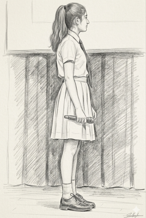
But that competition was just the beginning. Riya was still in primary school when she first stepped up to that microphone – and she never really stepped back. Years on, she has gone on to be selected for leading roles in annual plays and as a compere for major school events, time and again. The girl who once wrestled with stubborn sounds has become one of the most assured and accomplished voices in the school.
But the most precious prize that day was the lesson Riya handed me in return: students can change – wonderfully, profoundly change -when guided with patience and met with their own fierce determination. That is what makes teaching genuinely great.
Not the grammar. Not the grades. But this: the moment a student finds her voice, and you realize, with a full heart, that she had it in her all along.
Teaching is the art of believing in someone just long enough for them to begin believing in themselves.
Sherin Jayseelan: English Department